


JunYing Cherry Tao

JunYing Cherry Tao

The Nimonik team in China manages regulatory data and updates for over 15 countries and 40 jurisdictions. They blog regularly on important changes in China and Asia to help Nimonik customers stay in compliance at all times.

Blog posts from

JunYing Cherry Tao

NIMONIK-ERM EHSS 法规月刊 2025年7月

本期要闻/ Highlights of the Month

生态环境部、国家疾病预防控制局:有毒有害水污染物名录(第二批)

Ministry of Ecology and Environment, National Administration of Disease Control and Prevention: List of Toxic and Hazardous Water Pollutants (Second Batch)

为指导各地加强有毒有害水污染物监管,强化源头防控,实施调查监测,防范水环境风险,2019年生态环境部和国家卫生健康委联合发布了《有毒有害水污染物名录(第一批)》,收录了10种(类)有毒有害水污染物。

日前,基于《优先控制化学品名录(第二批)》收录的18种(类)物质,综合考虑物质的固有危害、水环境赋存能力、管控情况等因素,筛选出11种(类)物质纳入《有毒有害水污染物名录(第二批)》。其中包括铊及铊化合物、氰化物(易释放氰化物)、五氯酚及五氯酚钠、苯、甲苯、硝基苯类物质(2,4-二硝基甲苯)、苯胺类物质(邻甲苯胺)、1,1-二氯乙烯、六氯丁二烯、多环芳烃类物质和二噁英类物质。

此次列入名录的化学物质包含有机物9种(类),重金属及无机化合物2类,具有持久性和累积性,对水生生物具有2类以上的急性毒性和慢性毒性,通过水环境接触可对人体产生2类以上的致癌、致突变或生殖毒性效应以及其他高危害特性。

To guide local governments in strengthening the supervision of toxic and hazardous water pollutants, enhancing source prevention and control, implementing investigation and monitoring, and preventing water environmental risks, the Ministry of Ecology and Environment and the National Health Commission jointly issued the List of Toxic and Hazardous Water Pollutants (First Batch) in 2019, which included 10 types (categories) of toxic and hazardous water pollutants.

Recently, based on the 18 types (categories) of substances listed in the Priority Controlled Chemicals List (Second Batch), and after comprehensive consideration of factors such as inherent hazards, water environmental persistence, and regulatory status, 11 types (categories) of substances have been selected for inclusion in the List of Toxic and Hazardous Water Pollutants (Second Batch). These include thallium and thallium compounds, cyanides (readily releasable cyanides), pentachlorophenol and sodium pentachloro phenate, benzene, toluene, nitrobenzene compounds (2,4-dinitrotoluene), aniline compounds (o-toluidine), 1,1-dichloroethylene, hexachlorobutadiene, polycyclic aromatic hydrocarbons, and dioxin-like compounds.

The chemical substances included in this list comprise 9 types (categories) of organic compounds and 2 categories of heavy metals and inorganic compounds. They exhibit persistence and bioaccumulation potential, demonstrate acute and chronic toxicity to aquatic organisms (classified as Category 2 or higher), and can induce carcinogenic, mutagenic, or reproductive toxic effects (Category 2 or higher) in humans through water exposure, along with other high-hazard characteristics.

最新国家法律法规/ National Updates

生态环境部等十五部门:国家应对气候变化标准体系建设方案

Ministry of Ecology and Environment and 14 Other Departments: National Climate Change Standard System Construction Plan

为持续实施积极应对气候变化战略,提升应对气候变化管理工作的规范化、制度化、体系化水平,为我国应对气候变化工作提供坚实的技术支撑,《国家应对气候变化标准体系建设方案》从基础能力、减缓气候变化和适应气候变化3方面搭建了应对气候变化标准体系建设框架,进一步细分为15类二级标准和45类三级标准,并细化了每个二级子体系的定位作用与标准制修订工作的重点任务。

主要标准体系如下:
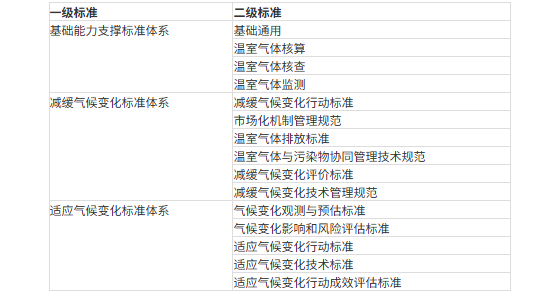
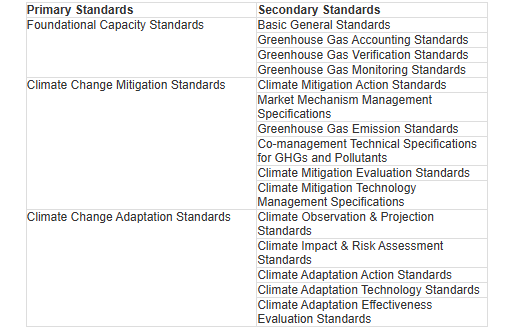
To continuously implement the national strategy for actively addressing climate change, enhance the standardization, institutionalization, and systematization of climate change management, and provide solid technical support for China’s climate change efforts, the National Climate Change Standard System Construction Plan establishes a framework for the climate change standard system across three dimensions: foundational capacity, climate change mitigation, and climate change adaptation. This framework is further subdivided into 15 secondary standards and 45 tertiary standards, with detailed definitions of the roles of each secondary subsystem and key tasks for standard development and revision

Key Standard Systems Include:
最新国家标准/ Latest National Standards

GB 2894-2025 安全色和安全标志

GB 2894-2025 Safety Colors and Safety Signs

GB 17051-2025 二次供水设施卫生规范

GB 17051-2025 Hygienic Specification for Facilities of Secondary Water Supply

立法草案/ Policy Initiatives & Developments

应急管理部:浸漆涂装安全规范(征求意见稿)

Ministry of Emergency Management: Safety Code for Dipping Painting (Draft for Comments)

本文件规定了浸漆涂装安全生产的总体要求、浸涂设备、电气及自动控制、通风系统与废气处理、涂料贮存和输送、操作与维护安全管理等安全技术要求,并描述了证实方法。适用于使用易燃或可燃液体涂料的工艺及其设备设计、制造、安装、验收和使用。

本文件不适用于使用液体涂料的电泳涂漆。

This document specifies the general safety requirements for dipping painting operations, including dipping coating equipment safety standards, electrical & automatic control systems, ventilation systems and exhaust gas treatment, coating storage and transportation protocols, and operation and maintenance safety management. It also defines verification methods for compliance.

The standard applies to processes and equipment (design/manufacturing/installation/acceptance/operation) using flammable or combustible liquid coatings, but excludes electrophoretic painting with liquid coatings.

应急管理部:关于公开征求《个体防护装备术语(征求意见稿)》等2项推荐性国家标准意见的函

Ministry of Emergency Management: Letter on Public Solicitation of Comments for Two Recommended National Standards Including ” Personal Protective Equipment Terminology (Draft for Comments)”

征求意见的标准中包含《个体防护装备术语(征求意见稿)》,该标准首次发布为 GB/T 12903-1991,2008年第一次修订;本次为第二次修订,整合了GB/T 30042—2013《个体防护装备 眼面部防护 名词术语》。适用于个体防护装备标准的制修订、技术文件编制、专业手册及教材书刊等的编写和翻译。本文件不适用于医疗救护用个人防护装备。

The standards open for comments include ” Personal Protective Equipment Terminology (Draft for Comments)”, which was first published as GB/T 12903-1991 and underwent its first revision in 2008. This marks the second revision, integrating GB/T 30042-2013 “Personal Protective Equipment—Eye and Face Protection—Vocabulary”. The standard applies to the formulation and revision of personal protective equipment standards, the preparation of technical documents, and the compilation and translation of professional manuals and textbooks. This document does not apply to personal protective equipment for medical rescue purposes.

应急管理部:《工贸企业特殊作业安全规范》(征求意见稿)

Ministry of Emergency Management: “Safety Code for Special Operations in Industrial and Trade Enterprises” (Draft for Comments)

应急管理部就《工贸企业特殊作业安全规范》向公众征求意见,本文件规定了工贸企业安全风险较高的特殊作业安全管理和技术要求,适用于冶金、有色、建材、机械、轻工、纺织、烟草、商贸等行业的企业。

本文件所定义的特殊作业包括高处作业、有限空间作业、临时用电作业、盲板抽堵作业、动火作业、吊装作业、带煤气作业、清库作业、熏蒸作业、热氨融霜作业等10类。

The Ministry of Emergency Management is soliciting public comments on the “Safety Code for Special Operations in Industrial and Trade Enterprises”. This document specifies safety management and technical requirements for high-risk special operations in industrial and trade enterprises, and applies to enterprises in industries including metallurgy, non-ferrous metals, building materials, machinery, light industry, textiles, tobacco, and commerce.

The special operations defined in this document include 10 categories: work at height, confined space operations, temporary electrical work, blind plate installation/removal, hot work, lifting operations, gas-related operations, silo cleaning, fumigation operations, and hot ammonia defrosting operations.

生态环境部:射线装置分类(修订征求意见稿)

Ministry of Ecology and Environment: Classification of Radiation Devices (Revised Draft for Comments)

文件对2017年发布施行的《射线装置分类》进行了修订,将Ⅲ类射线装置细分为Ⅲ-A类和Ⅲ-B类,以更精准地匹配不同射线装置的实际风险等级与其相应的安全管理要求。

非医用射线装置方面,Ⅰ类射线装置新增中子产额大于等于 1E+12n/s的中子源装置,Ⅱ类射线装置的中子发生器修改为中子产额小于 1E+12n/s 的中子源装置。文件同时还修改了部分装置的定义。

The document revises the 2017 “Classification of Radiation Devices”, subdividing Class III devices into III-A and III-B categories to more precisely align with the actual risk levels and corresponding safety management requirements of different radiation devices.

For non-medical radiation devices, Class I devices now include neutron source installations with neutron yields ≥1E+12n/s, while Class II devices modify the definition of neutron generators to those with neutron yields <1E+12n/s. The document also updates definitions for certain devices.

财政部:《企业可持续披露准则——基本准则(试行)》应用指南(征求意见稿)

Ministry of Finance: Application Guidelines for “Corporate Sustainability Disclosure Standards – Basic Standards (Trial)”

2024年11月20日,财政部等9部门联合印发《基本准则》,拉开了国家统一的可持续披露准则体系建设的序幕。为便于各有关方面准确理解和把握《基本准则》,研究起草了《应用指南》征求意见稿,针对前期《基本准则》研究制定过程中各方较为关注的重点难点问题以及需要进一步解释、细化的内容,进行系统梳理和详细说明,以增强《基本准则》的指导性和可操作性。

征求意见稿由9个问题组成,分别是价值链、报告主体、信息的关联、可持续信息的基本使用者、重要性评估、相称性原则、可持续风险和机遇的当期和预期财务影响、企业的战略和业务模式对可持续风险的韧性以及可持续影响信息披露。

On November 20, 2024, the Ministry of Finance and eight other departments jointly issued the “Basic Standards”, marking the beginning of the construction of a nationally unified sustainability disclosure standards system. To facilitate accurate understanding and implementation of the “Basic Standards”, the draft “Application Guidelines” has been formulated. It systematically addresses key and challenging issues raised during the development of the “Basic Standards”, as well as content requiring further clarification and elaboration, thereby enhancing the guidance and operability of the “Basic Standards”.

The draft for comments consists of nine key sections: value chain, reporting entity, information linkage, primary users of sustainability information, materiality assessment, proportionality principle, current and anticipated financial impacts of sustainability risks and opportunities, resilience of corporate strategy and business models to sustainability risks, and disclosure of sustainability impact information.

国家市场监督管理总局:特种设备风险防控知识图谱构建与辅助决策技术框架指南(草案)

State Administration for Market Regulation: Technical Framework Guidelines for Special Equipment Risk Prevention Knowledge Graph Construction and Decision Support (Draft)

本标准通过融合设备基础数据、法规标准、检验报告、监察文书等文本数据,搭建检验、监管与应急知识图谱,实现智能辅助决策问答。规定了特种设备安全风险防控知识图谱与辅助决策的术语和定义,给出了风险防控知识图谱与辅助决策的整体框架及范畴界定,提供了知识图谱构建与更新、辅助决策技术设计与系统开发、基于知识图谱的风险防控知识服务应用的框架指南。

适用于特种设备安全风险防控知识图谱构建与辅助决策技术系统开发。

This standard integrates equipment basic data, regulatory standards, inspection reports, and supervisory documents to establish inspection, supervision, and emergency knowledge graphs, enabling intelligent decision support. It defines terms and concepts for special equipment safety risk prevention knowledge graphs and decision support, outlines the overall framework and scope, and provides guidelines for knowledge graph construction and updates, decision support technology design and system development, and knowledge graph-based risk prevention applications.

Applicable to the development of special equipment safety risk prevention knowledge graph construction and decision support technology systems.

应急管理部:危险化学品重大危险源企业双重预防机制建设应用规范(征求意见稿)

Ministry of Emergency Management: Application Specifications for Dual Prevention Mechanism Construction in Major Hazard Installations of Hazardous Chemicals Enterprises (Draft for Comments)

本文件规定了危险化学品生产装置、储存设施或场所安全风险分级管控和隐患排查治理工作的基本要求、建设要求、应用要求等内容。适用于涉及重大危险源的危险化学品生产企业、经营企业、使用危险化学品从事生产的化工企业(以下简称企业),其他化工企业可参照执行。

本文件附有安全风险分析对象确定和单元划分方法、典型事故类别及常见能量载体、事故后果等级说明及示例、隐患排查任务清单、危险化学品重大危险源安全包保责任人隐患排查任务、岗位隐患排查周期、运行效果评估模型等七个附录。

This document specifies the basic requirements, construction requirements, and application requirements for safety risk classification control and hidden danger investigation and governance in hazardous chemical production facilities, storage facilities, or sites. It applies to hazardous chemical production enterprises, trading enterprises, and chemical enterprises using hazardous chemicals for production (hereinafter referred to as “enterprises”) involving major hazard installations, while other chemical enterprises may refer to it for implementation.

The document includes seven appendices: methods for determining safety risk analysis objects and unit division, typical accident categories and common energy carriers, descriptions and examples of accident consequence levels, hidden danger investigation task lists, hidden danger investigation tasks for safety responsibility personnel of major hazard installations in hazardous chemicals, hidden danger investigation cycles for positions, and operational effectiveness evaluation models.

最新地方性法规/ Regional Updates

北京市:北京市工贸企业危险化学品使用安全管理指南

Beijing Municipality: Beijing Municipal Guidelines for Safety Management of Hazardous Chemicals Usage in Industrial and Trading Enterprises

指南》适用于全市范围内冶金、有色、建材、机械、轻工、纺织、烟草、商贸等行业生产、加工过程及其配套辅助系统中使用危险化学品的企业。

明确了危险化学品采购、装卸、储存、使用、应急全流程管理的要求,并明确了涉氨、涉氢、涉环氧乙烷、涉氯等重点涉危场所的安全要求。

The Guidelines apply to enterprises in metallurgy, non-ferrous metals, building materials, machinery, light industry, textiles, tobacco, commerce and other industries that use hazardous chemicals in production, processing processes and their supporting auxiliary systems within the city.

The document specifies requirements for whole-process management of hazardous chemicals including procurement, loading/unloading, storage, usage and emergency response. It particularly clarifies safety requirements for key hazardous facilities involving ammonia, hydrogen, ethylene oxide, chlorine and other major hazardous substances.

江苏省:江苏省工业、建筑业、服务业、生活和农业用水定额(2025年修订)

Jiangsu Province: Jiangsu Province Water Quota Standards for Industry, Construction, Service Sectors, Domestic Use and Agriculture (2025 Revision)

通知在2019年版本基础上进行全面修订,并吸收了2024年试行的农业用水定额成果,实现了对江苏省国民经济行业门类的全覆盖,涵盖工业、建筑业、服务业、生活和农业五大领域。具体包括290个行业中类、423个行业小类、731项产品及2914个用水定额值。 

 《定额》在国家定额或者省级定额的基础上进一步收紧标准,对170项产品补充制定了先进值或领跑值,狠抓大户水效,进一步提高全省用水效率。

The notice comprehensively revises the 2019 version and incorporates the trial results of agricultural water quotas implemented in 2024, achieving full coverage of Jiangsu’s national economic sectors across five major fields: industry, construction, services, domestic use, and agriculture. It specifically includes 290 intermediate industry categories, 423 sub-industry categories, 731 product items, and 2,914 water quota values.

The Quota tightens standards beyond national or provincial benchmarks by establishing advanced or leading values for 170 additional products, focusing on water efficiency for major consumers to further enhance provincial water-use efficiency

阅读更多

NIMONIK-ERM EHSS 法规月刊2021年2月

本期要闻

国务院:排污许可管理条例

国务院1月24日发布《排污许可管理条例》,意味着排污许可制度从部门规章升格为行政法规。

管理条例总体框架基本延续了《排污许可管理办法(试行)》,进一步规范了排污许可证申请与审批,明确环境影响评价批准文件为核发排污许可证的必要条件;详细说明“排污许可证变更”和“重新申请取得排污许可证”的情形;补充了填报排污登记表的要求;明确排污单位的排污管理的主体责任,规定原始监测记录保存期限不得少于5年,台账保存期限从3年延长至5年;条例还强调了事中事后监管,地方环保部门应将排污许可执法检查纳入执法年度计划,并将执法内容、结果以及处罚决定在全国排污许可证管理信息平台上进行公布等等。

条例制定了更为严格的法律责任,并且增加了一些新的处罚情形,如未建立台账、未如实记录生产设施和污染防治设施的运行情况、未提交执行报告等行为会处以最高2万元的罚款。


最新国家法律法规

国家卫生健康委员会:工作场所职业卫生管理规定

管理规定废止了原安监总局2012年发布的《工作场所职业卫生监督管理规定》(国家安监总局令第47号)。本次修改一方面体现了国家卫生健康委对原国家安全生产监督管理总局职业安全健康监督管理职责的整合,一方面反映了上位法的变化。

值得注意的一个变化是新规定将职业病危害一般的用人单位职业病危害因素检测频率从每年至少一次放宽至每三年至少进行一次职业病危害因素检测,该要求有助于降低那些低职业病风险企业的合规成本。

国家卫生健康委员会:职业病诊断与鉴定管理办法

办法废止了原卫生部2013年2月19日公布的《职业病诊断与鉴定管理办法》。

新办法细化了劳动者提供相关证明资料的要求,界定了“证据”内涵,突出了用人单位的相关义务,明确了职业病诊断机构的备案管理制度,规范了职业病诊断管理,明确了职业病诊断办理时限,缩短了职业病鉴定办理时限。

生态环境部:重点监管单位土壤污染隐患排查指南(试行)

本指南用于指导土壤重点监管单位组织开展土壤污染隐患排查工作。

重点监管单位原则上应在本指南发布后一年内,以厂区为单位开展一次全面、系统的土壤污染隐患排查,新增重点监管单位应在纳入土壤污染重点监管单位名录后一年内开展。对于新、改、扩建项目,应在投产后一年内开展补充排查。

生态环境部:关于推进危险废物环境管理信息化有关工作的通知

通知要求自2021年起,上一年度危险废物实际产生总量达到10吨及以上的单位,应于每年3月31日前依法通过固体废物管理信息系统申报上一年度危险废物种类、产生量、流向、贮存、处置等有关情况,并备案危险废物管理计划。

最新国家标准

• 加油站大气污染物排放标准(GB 20952-2020)

• 储油库大气污染物排放标准(GB 20950-2020)

• 油品运输大气污染物排放标准(GB 20951-2020)


立法草案

全国人大常委会:安全生产法(修正草案)

草案进一步强化和落实生产经营单位的主体责任,写入了安全风险分级管控和隐患排查治理双重预防工作机制;进一步明确地方政府和有关部门的安全生产监督管理职责;加大了对生产经营单位及其负责人安全生产违法行为的处罚力度。

另外,要求生产经营单位关注从业人员的生理、心理状况和行为习惯,加强对从业人员的心理疏导、精神慰藉,防范从业人员行为异常导致事故发生。

住房和城乡建设部:建设工程施工现场消防安全技术规范GB50720—2011(局部修订条文征求意见稿)

本次修订的一个重要变化是根据行业发展纳入了对超高层新建建筑及既有建筑改造工程施工现场的消防要求。此外,新增现场平面布置图的消防标示要求,新增永临结合消防设施、防火盆、避难层(间)、临时排烟系统、义务消防队等要求。

生态环境部:关于加强危险废物鉴别工作的通知(征求意见稿)

通知要求生态环境部通过全国固体废物管理信息系统建立信息平台,为企业、公众和政府有关部门提供免费的信息公开服务。

开展危险废物鉴别前,产生固体废物的单位应在信息平台登记拟委托开展或自行开展危险废物鉴别情况,并选择危险废物鉴别单位。鉴定完成后,应将危险废物鉴别报告和其他相关资料上传至信息平台向社会公开。鉴定成果通过信息平台共享,预计可降低其它企业的危废鉴定成本。

通知附件《危险废物鉴别单位管理要求》,明确了危险废物鉴别单位应满足的机构、人员、分析测试能力、组织体系,以及鉴别报告质量控制和信息公开等方面条件。

最新地方性法规

江苏省:江苏省重污染天气应急预案

2021预案修订并废止了2019版应急预案。

主要变化包括应急响应措施部分引入绩效分级评价。引领性或A级的企业,可自主采取减排措施;B级企业Ⅲ级、Ⅱ级、Ⅰ级应急响应措施的减排比例,原则上分别不低于30%、40%、50%;C级和D级企业制定更严格的减排措施。

江苏省:江苏省冶金等工业企业危险化学品使用安全专项治理要点(试行)

要点适用于江苏省冶金、有色、建材、机械、轻工、纺织、烟草等工业使用危险化学品用于产品的生产、加工以及配套辅助设施,且使用量及储存量较多的企业。

要点从通用、重大危险源、涉氨制冷、重点监管危险化工工艺,且自产自用危险化学品的、危险化学品(氢气、氧气、氮气、氯气、煤气、氨气等)储气站点、使用危险化学品进行电镀、喷涂、印染、半导体钝化等作业、使用易燃易爆危险化学品的、使用易挥发且产生有毒害危险化学品等八个方面规定了详细的整治要求。

阅读更多

NIMONIK-ERM ESG 法规月刊 2026年5月

最新国家法律法规 National Updates

工业产品绿色设计指南(2026年版)

Green Design Guidelines for Industrial Products (2026 Edition)

我国绿色设计推行工作起步于2013年,工业和信息化部联合有关部门出台了《关于开展工业产品生态设计的指导意见》,鼓励和引导行业龙头企业开展绿色设计试点示范、标准研制、产品评价等方面工作。本次发布的《工业产品绿色设计指南(2026年版)》是梳理总结前期试点示范中的典型经验做法,凝聚行业绿色设计共识而研究制定的,指导产品研发人员践行绿色设计理念和方法,推广绿色设计解决方案,开发绿色产品。

绿色设计涉及产品全生命周期各环节,概念抽象、覆盖面广,为便于行业企业理解和推广,《指南》梳理总结了11个绿色成效明显、广泛形成共识的绿色设计方向,分别是长寿命设计、无害化设计、轻量化设计、节能设计、节水设计、节材设计、降噪设计、节空间设计、易回收再生设计、可重复使用设计、零碳设计。同时进一步将每个设计重点方向与行业实际应用紧密结合,以15个重点行业为典型示例,细化形成126个解决方案,指导产品研发人员践行绿色设计理念和方法。

下一步工信部将逐步建立绿色设计通则国家标准和重点行业技术要求的“1+N”标准体系,推动绿色设计有关国际标准制修订。同时推动各地区、重点行业参照《指南》绿色设计的重点方向,开发技术先进、经济可行、供需适配的绿色设计解决方案。选择绿色设计亮点突出、市场认可度高、行业影响力大的产品,评估产品绿色设计价值,形成一批具有行业共识的绿色设计标志性产品。

China’s green design initiatives began in 2013, when the Ministry of Industry and Information Technology (MIIT), in collaboration with relevant departments, issued the “Guiding Opinions on Promoting Ecological Design of Industrial Products” to encourage and guide leading enterprises in the industry to carry out pilot demonstrations, develop standards, and conduct product evaluations related to green design. The newly released “Green Design Guidelines for Industrial Products (2026 Edition)” was developed by compiling and summarizing typical experiences and practices from previous pilot demonstrations and by consolidating industry consensus on green design. It is intended to guide product R&D personnel in practicing green design concepts and methods, promoting green design solutions, and developing green products.

Green design encompasses all stages of a product’s life cycle; it is an abstract concept with a broad scope. To facilitate understanding and adoption by industry enterprises, the Guidelines identify and summarize 11 green design directions that have demonstrated significant results and achieved widespread consensus. These are: long-life design, non-hazardous design, lightweight design, energy-saving design, water-saving design, material-saving design, noise-reduction design, space-saving design, design for easy recycling and regeneration, reusable design, and carbon-neutral design. Furthermore, each key design direction is closely integrated with practical industry applications. Using 15 key industries as typical examples, the Guidelines have been refined into 126 specific solutions to guide product R&D personnel in implementing green design concepts and methods.

Moving forward, MIIT will gradually establish a “1+N” standard system comprising national standards for general green design principles and technical requirements for key industries, while promoting the formulation and revision of relevant international green design standards. Concurrently, it will encourage regions and key industries to develop technically advanced, economically viable, and supply-demand-aligned green design solutions in accordance with the key directions outlined in the Guidelines. Products with outstanding green design features, high market recognition, and significant industry influence will be selected to assess their green design value, thereby identifying a group of landmark green design products that enjoy industry consensus.

3-氯丙炔等5种化学品纳入《危险化学品目录(2015版)》

Five chemicals, including 3-chloropropyne, have been included in the “List of Hazardous Chemicals (2015 Edition)”

应急管理部等10部门已于2026年4月16日联合发布公告,决定将3-氯丙炔、2-碘酰基苯甲酸、2-重氮乙酰乙酸对硝基苄酯、甲磺酰基叠氮、2-硝基-3-甲基苯甲酸等5种化学品纳入《危险化学品目录(2015版)》。

2026年4月28日,中国应急管理部办公厅又发布了关于认真做好3-氯丙炔等5种危险化学品安全监管工作的通知,并随文公布了5种危险化学品分类信息表。

相关企业应于2026年7月31日前依法依规办理危险化学品安全生产许可证、危险化学品经营许可证、危险化学品安全使用许可证。

On April 16, 2026, the Ministry of Emergency Management and nine other departments jointly issued an announcement deciding to include 3-chloropropyne, 2-iodoacetylbenzoic acid, 2-diazoacetoacetic acid p-nitrobenzyl ester, methylsulfonyl azide, and 2-nitro-3-methylbenzoic acid into the “List of Hazardous Chemicals (2015 Edition).”

On April 28, 2026, the General Office of the Ministry of Emergency Management of China issued a notice regarding the rigorous implementation of safety supervision for these five hazardous chemicals, including 3-chloropropyne, and published a classification information table for the five hazardous chemicals along with the notice.

Relevant enterprises must apply for the Hazardous Chemicals Production Safety Permit, the Hazardous Chemicals Operating Permit, and the Hazardous Chemicals Safe Use Permit in accordance with laws and regulations by July 31, 2026.

最新国家标准Latest National Standards

危险化学品企业防雷安全重大隐患判定(GB/T 47320-2026)

Determination for Major Hidden Dangers in Lightning Protection Safety of Hazardous Chemical Enterprises(GB/T 47320-2026)

立法草案/ Policy Initiatives & Developments

中华人民共和国水法(修订草案)(征求意见稿)

Water Law of the People’s Republic of China (Revised Draft) (Consultation Paper)

全国人大公开发布《水法》修订草案征求意见稿。修订草案主要围绕明确水利事业发展总体要求,加强水资源开发、利用管理,加强水资源配置管理和节约集约利用,加强江河、湖泊管理与保护,规范水工程建设与运行,完善法律责任等方面作出相关修改。

修订草案新增了“江河、湖泊管理与保护”一章,规定国家建立江河、湖泊定期普查制度,明确江河、湖泊的管理原则和管理体制,对涉河建设项目作出了严格规范。

The National People’s Congress has publicly released the draft for public comment of the revised Water Law. The draft primarily focuses on clarifying the overall requirements for the development of the water conservancy sector, strengthening the management of water resource development and utilization, enhancing the management of water resource allocation and promoting efficient and intensive use, strengthening the management and protection of rivers and lakes, standardizing the construction and operation of water projects, and improving legal liabilities.

The draft amendment adds a new chapter titled “Management and Protection of Rivers and Lakes,” stipulating that the state shall establish a system for periodic surveys of rivers and lakes, clarifying the management principles and institutional framework for rivers and lakes, and imposing strict regulations on construction projects involving rivers.

汽车工业大气污染物排放标准(征求意见稿)

Emission Standards of Air Pollutants for Automotive Industry (Consultation Paper)

当前,中国没有针对汽车工业制定行业排放标准。汽车工业目前仍然执行《大气污染物综合排放标准》(GB 16297-1996)、《工业炉窑大气污染物排放标准》(GB9078-1996)等综合标准和通用标准,缺乏行业针对性。现行标准缺少油雾等汽车行业特征污染物项目,且排放限值严重滞后,不利于推动行业技术进步。因此制定《汽车工业大气污染物排放标准》,规范行业大气污染物排放、提升行业环境管理水平。

根据《国民经济行业分类》(GB/T4754-2017),本标准中汽车工业指制造各种汽车产品、零部件及配件的工业,包括从事汽车用发动机、底盘和车体等主要部件制造和将其组装成为汽车产品的企业及从事汽车各种零部件及配件制造的工业(GB/T4754―2017中的汽车制造业,行业类别C36)。本标准汽车工业还包括粉末冶金零部件、聚氯乙烯零部件、纤维增强塑料零部件的制造。

标准按照汽车整车、发动机及各类零部件生产的不同工序,确定大气污染物控制因子,包括颗粒物、二氧化硫、氮氧化物3项常规污染控制因子,以及硝酸雾、硫酸雾、氯化氢、氟化物、氰化物、氨、油雾、甲醛、苯、苯系物、NMHC等11项针对不同工艺的特征污染控制因子,并对VOCs处理设施的处理效率、排气筒高度及燃烧装置运行参数提出了明确约束。

Currently, China does not have industry-specific emission standards for the automotive industry. The automotive industry continues to comply with general standards such as the “Integrated Emission Standard for Air Pollutants” (GB 16297-1996) and the “Emission Standard of Air Pollutants for Industrial Kiln and Furnace” (GB 9078-1996), which lack industry-specific focus. The current standards do not include pollutants characteristic of the automotive industry, such as oil mist, and their emission limits are significantly outdated, which hinders technological progress in the sector. Therefore, the “Emission Standards of Air Pollutants for Automotive Industry” has been formulated to regulate air pollutant emissions in the industry and enhance environmental management standards.

According to the “Classification of National Economic Industries” (GB/T 4754-2017), the automotive industry as defined in this standard refers to the industry engaged in the manufacture of various automotive products, components, and accessories. This includes enterprises engaged in the manufacture of major automotive components such as engines, chassis, and vehicle bodies, as well as their assembly into finished automotive products, and industries engaged in the manufacture of various automotive components and accessories (the automotive manufacturing industry in GB/T 4754-2017, industry category C36). The automotive industry covered by this standard also includes the manufacture of powder metallurgy components, polyvinyl chloride (PVC) components, and fiber-reinforced plastic components.

The standard establishes air pollutant control factors based on the different production processes for complete vehicles, engines, and various components, including three conventional pollutant control factors—particulate matter, sulfur dioxide, and nitrogen oxides—as well as 11 characteristic pollution control factors for different processes, such as nitric acid mist, sulfuric acid mist, hydrogen chloride, fluorides, cyanides, ammonia, oil mist, formaldehyde, benzene, benzene compounds, and NMHC. It also sets clear requirements for the treatment efficiency of VOCs treatment facilities, exhaust stack heights, and operating parameters of combustion devices.

最新地方性法规/ Regional Updates

上海市加强危险化学品企业吨桶安全使用管理

Shanghai Strengthens Safety Management of Ton-Container Use in Hazardous Chemicals Enterprises

针对吨桶在危险化学品储存和转运过程中存在的安全风险,上海市应急管理局结合事故警示和监管要求,发布专项通知。通知从隐患排查、制度建设、本质安全和监督指导等方面,对吨桶选型、使用、检查和管理提出明确要求,并配套发布安全指引和附件。

通知要求各相关企业要在制度层面对吨桶的安全管理作出刚性约束,把安全使用相关规定制度不断融入企业现有安全生产管理体系中。各相关企业要自觉履行安全生产主体责任,结合《防止静电事故通用要求GB12158-2024》及《涉及可燃液体吨桶防火防爆的安全指引》(附件1)等标准规范,主动辨识作业过程中的风险点并排查存在的事故隐患。及时落实相应的风险管控措施,制定隐患整改方案,明确负责人、安全措施、资金来源、整改时限,确保整改效果。

In response to safety risks associated with ton containers during the storage and transfer of hazardous chemicals, the Shanghai Emergency Management Bureau has issued a special notice based on accident warnings and regulatory requirements. The notice sets forth clear requirements for the selection, use, inspection, and management of ton containers in terms of hazard identification, system development, intrinsic safety, and supervision and guidance, and includes accompanying safety guidelines and appendices.

The notice requires all relevant enterprises to establish mandatory institutional constraints for the safety management of ton containers and to continuously integrate relevant safety regulations into their existing occupational safety and health management systems. All relevant enterprises must conscientiously fulfill their primary responsibility for work safety. In accordance with standards such as the “General Requirements for the Prevention of Electrostatic Accidents” (GB 12158-2024) and the “Safety Guidelines for Fire and Explosion Prevention in Ton Containers Involving Flammable Liquids” (Appendix 1), they must proactively identify risk points during operations and investigate potential accident hazards. They must promptly implement corresponding risk control measures, formulate hazard rectification plans, and clearly define responsible personnel, safety measures, funding sources, and rectification deadlines to ensure the effectiveness of the rectification.

江苏省公共建筑用能和碳排放限额指南(试行)

Guidelines on Energy Consumption and Carbon Emission Limits for Public Buildings in Jiangsu Province (Trial) 

本指南是首个省级发布的系统性公共建筑用能和碳排放限额管理要求。指南明确了公共建筑能耗和碳排放的统计边界、计算方法及限额指标,适用于江苏省公共建筑运行管理。

指南按照区域类型(夏热冬冷地区Ⅰ~Ⅲ区、寒冷地区等)及建筑功能类型(办公、学校、医院、旅馆、商场等),分别设置了单位建筑面积能耗和碳排放的约束值、基准值和引导值,并针对高使用强度建筑等情形设置了指标修正方法,以保证限额管理的合理性与准确性。

This guideline is the first systematic set of management requirements for energy consumption and carbon emission limits in public buildings issued at the provincial level. It clarifies the statistical boundaries, calculation methods, and limit indicators for energy consumption and carbon emissions in public buildings, and applies to the operation and management of public buildings in Jiangsu Province.

The guidelines establish constraint values, baseline values, and guidance values for energy consumption and carbon emissions per unit of floor area based on regional types (Zones I–III in hot-summer and cold-winter regions, cold regions, etc.) and building function types (offices, schools, hospitals, hotels, shopping malls, etc.). Additionally, the guidelines provide adjustment methods for indicators in specific scenarios, such as high-intensity-use buildings, to ensure the rationality and accuracy of the quota management system.

阅读更多

Nimonik系统教程

Nimonik系统教程 Nimonik系统教程分为以下6各部分,在观看中有任何疑问,请随时联系您的销售或者邮件 … 阅读更多

Q&A|EHS相关问题解答1

注:以下所引用的法律法规在本信息发布的时候是有效的,请留意其时效性。 问1:光气(碳酰氯)设施安全距离 答:请 … 阅读更多

Q&A|EHS相关问题解答2

注:以下所引用的法律法规在本信息发布的时候是有效的,请留意其时效性。 问1:RTO设置的安装设计标准,包括风管 … 阅读更多

专家Q&A|《危险化学品安全法(征求意见稿)》—解读及拓展

本期问答来源于

网络研讨会|《危险化学品安全法(征求意见稿)》—解读及拓展

如需获取相关资料,

请邮件至info@nimonik.com咨询

注:以下所引用的法律法规在本信息发布的时候是有效的,请留意其时效性。

Q:目前对危险化学品的判断,是按目录还是定义?
A:根据《危险化学品名录2015》说明部分“第一条 危险化学品的定义和确定原则”,满足其确定原则的化学品即危险化学品。
目录上列出的2828项主要用于确定化学品是否需要申请相关许可, 并不能完全覆盖所有危险化学品。

阅读更多

什么是法规清单?

亮点 什么是法律清单? 简单来说,法律清单是一份全面的文件,列出了所有相关法律、法规、标准和组织活动的指导方针 … 阅读更多

从EHS管理角度看民法典

十三届全国人大三次会议5月28日表决通过了《中华人民共和国民法典》,国家主席习近平签署第45号主席令予以公布。民法典是新中国第一部以法典命名的法律,开创了我国法典编纂立法的先河,具有里程碑意义。

民法典共7编、1260条,各编依次为总则、物权、合同、人格权、婚姻家庭、继承、侵权责任和附则,自2021年1月1日起施行,婚姻法、继承法、民法通则、收养法、担保法、合同法、物权法、侵权责任法、民法总则同时废止。

以往在EHS合规管理一般不大考虑民法,而民法典的出台,给EHS管理带来了新的角度,下面这些合规义务作为企业EHS管理者应该知道:

阅读更多

医疗器械监管与标准包

医疗器械制造商在复杂的监管环境中运营,产品设计、制造工艺和上市后活动均受法规、技术标准和监管指导文件的综合控制 … 阅读更多

合规放生

2020年10月17日发布的《生物安全法》对合规“放生”提出了强制要求,违规“放生”将承担严重的法律后果。以下 … 阅读更多